

A Date with Diddie
On November 30, 1952, someone beat and strangled television personality Amelie "Diddie" Cooper in her New Orleans apartment. The case was never solved.

It was Allison who noticed something was wrong. The little girl had tried to wake her mother that Sunday morning, early, before anyone else stirred, and refused to try again.
When her great-grandmother Coralee asked why, Allison said only that her mom “looked funny.”
Coralee walked to the bedroom. The bed was empty.
She found Amelie Jane “Diddie” Cooper in the children’s room, half on and half off one of the twin beds. Naked from the waist down. Lingerie and quilted housecoat rolled up over her breasts.

Purple finger marks circled her throat. Blood soaked her hands and clothing, and a bloody foam had seeped from her nose.
Someone, Coralee later told police, had apparently dressed her with her clothes turned inside out.
Diddie Cooper was thirty years old.
Fourteen hours earlier, she had been at the Tulane-LSU game, sitting in the rain.
New Orleans knew Diddie Cooper. She hosted “A Date with Diddie,” a weekly variety show on WDSU-TV spotlighting local talent. The New Orleans States, January 13, 1954, called her an attractive young socialite from a prominent Louisiana family.
Accurate, to some degree.

Her father, Robert Woolfolk, was an investment banker; her mother, Ruth Samson Woolfolk, was an accomplished musician. Diddie, a singer like her mother, made her society debut after high school and attended H. Sophie Newcomb Memorial College at Tulane.
She had been married before. On September 5, 1942, Diddie married Macrino Trelles, heir to a New Orleans cigar fortune, in a ceremony the papers put on the front page.
It didn’t last. She divorced Trelles in 1947 and four years later married James Leland Cooper.
Jimmy Cooper was clean-shaven and expensively dressed, his red hair dyed to a shade slightly too vivid for his age, his hairline retreating above a look the papers called smug.
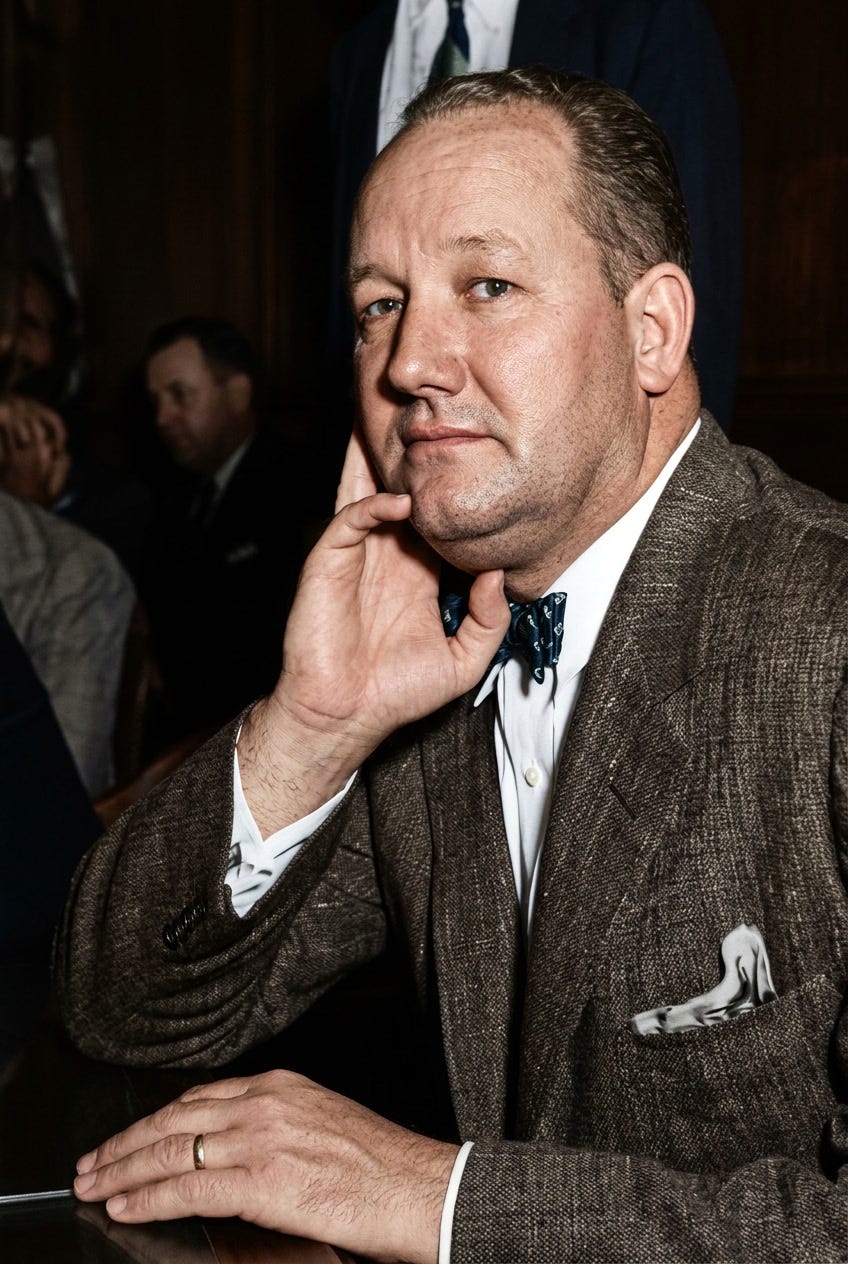
He was born in Clara, Mississippi, studied medicine briefly in Chicago, and in 1932 was arrested there in a stolen-car scheme.
After six months in the Cook County House of Corrections, he moved to New Orleans, managed theaters in the French Quarter, and eventually bought the Court of Two Sisters restaurant on Royal Street.
During the war, he served as a Quartermaster Corps captain. When he came home, the restaurant was thriving: his first wife, Mildred Schmidt Cooper, had kept it going while he was overseas.
Jimmy and Mildred divorced on June 21, 1951. Nine days later, he married Diddie.
He adored her children from her first marriage, Mackie and Allison. He paid for private school and summer camp. When Diddie gave birth to their son, Donald, in 1952, the newspapers described the Coopers as an ideal couple.
The staff at the Court of Two Sisters had a different read.
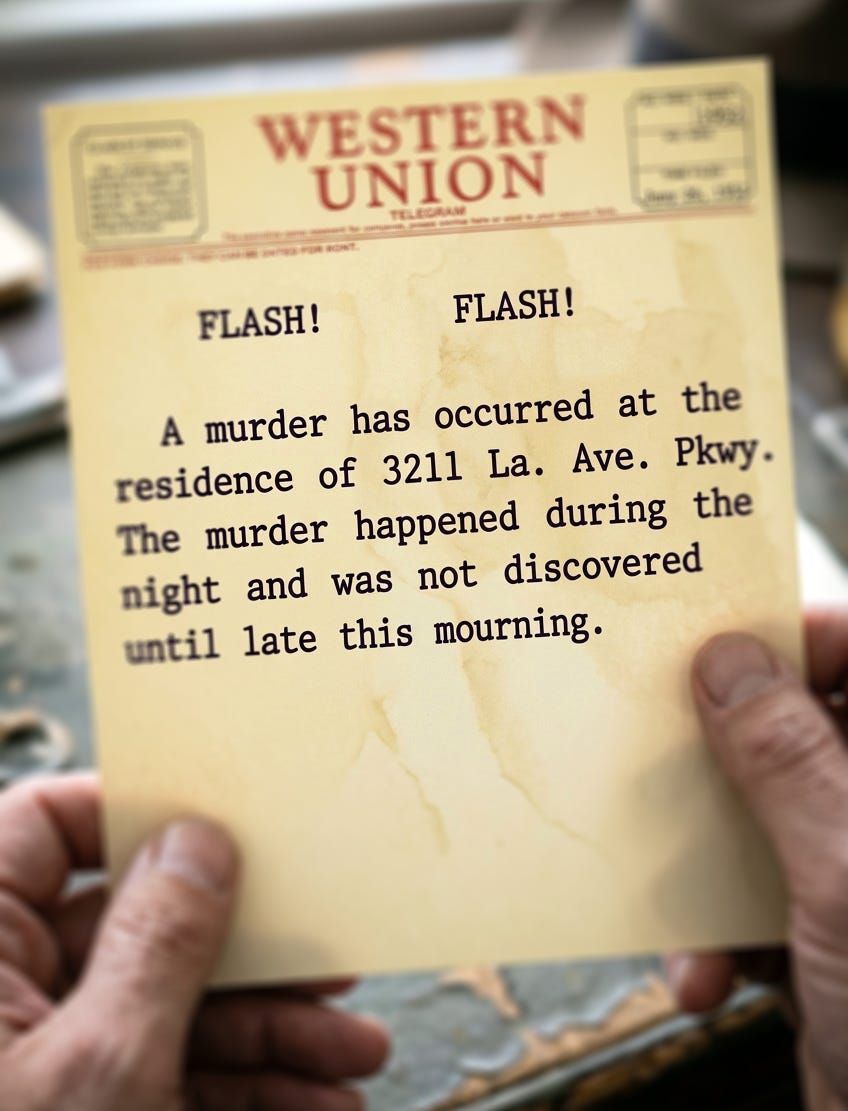
Jimmy drank. When he drank, he hit Diddie and described their private life to whoever was standing nearby. The couple separated before Donald’s birth but reconciled for the baby’s sake. After the birth, restaurant employees said Diddie seemed afraid to leave no matter how belligerent Jimmy became.
On May 6, 1952, she called the police. Officers found Jimmy drunk and took him to jail wearing only his undershorts and what New Orleans had already started calling a “wife-beater” shirt. The next morning, Diddie filed for formal separation.
By June, Jimmy had moved out of their apartment at 3211 Louisiana Avenue Parkway. He paid alimony and covered the rent. He also refused to consider divorce.
He showed up uninvited at Diddie’s parties and threatened to evict her if she wouldn’t take him back. Then begged her in front of her friends.
In October, after a Tulane-Georgia football game, Jimmy crashed a cocktail party Diddie hosted. She left her own apartment.
Later that night at Perez’s nightclub, he begged her guests to intercede on her behalf.
November 29, 1952 was cold and stormy. Diddie joined two other couples to attend another game, Tulane-LSU, in Tulane Stadium
Nobody invited Jimmy, but he came anyway.
At first, he seemed fine, sharing umbrellas and raincoats to the group.
Then Diddie refused to sit with him. She moved to the row in front with the other women and told him she had plans after the game. She warned she’d call the police if he followed.
Jimmy apologized. Said he hadn’t been drinking. Then asked whether her son could spend the night at his house.
Mackie loved him, called him Daddy, had stayed at Jimmy’s before. But this was a Saturday, the busiest night of the week at the Court of Two Sisters, especially after a Tulane-LSU game. There was no clear reason to bring the boy to Jimmy Cooper’s house that night.
But Diddie said yes anyway.
After the game, she went home to change shoes, ditching the pair soaked from the rain before joining friends at Charlie’s Steak House on Dryades Street. Later the group moved to the Key Club on Louisiana Avenue for dancing.
By 2:00 a.m., Diddie sat across the street from her home having coffee with neighbors.
Crossing back home, she realizes she has left her hat and yells back. She will pick it up in the morning. Her neighbors watch her climb the stairs to her apartment.
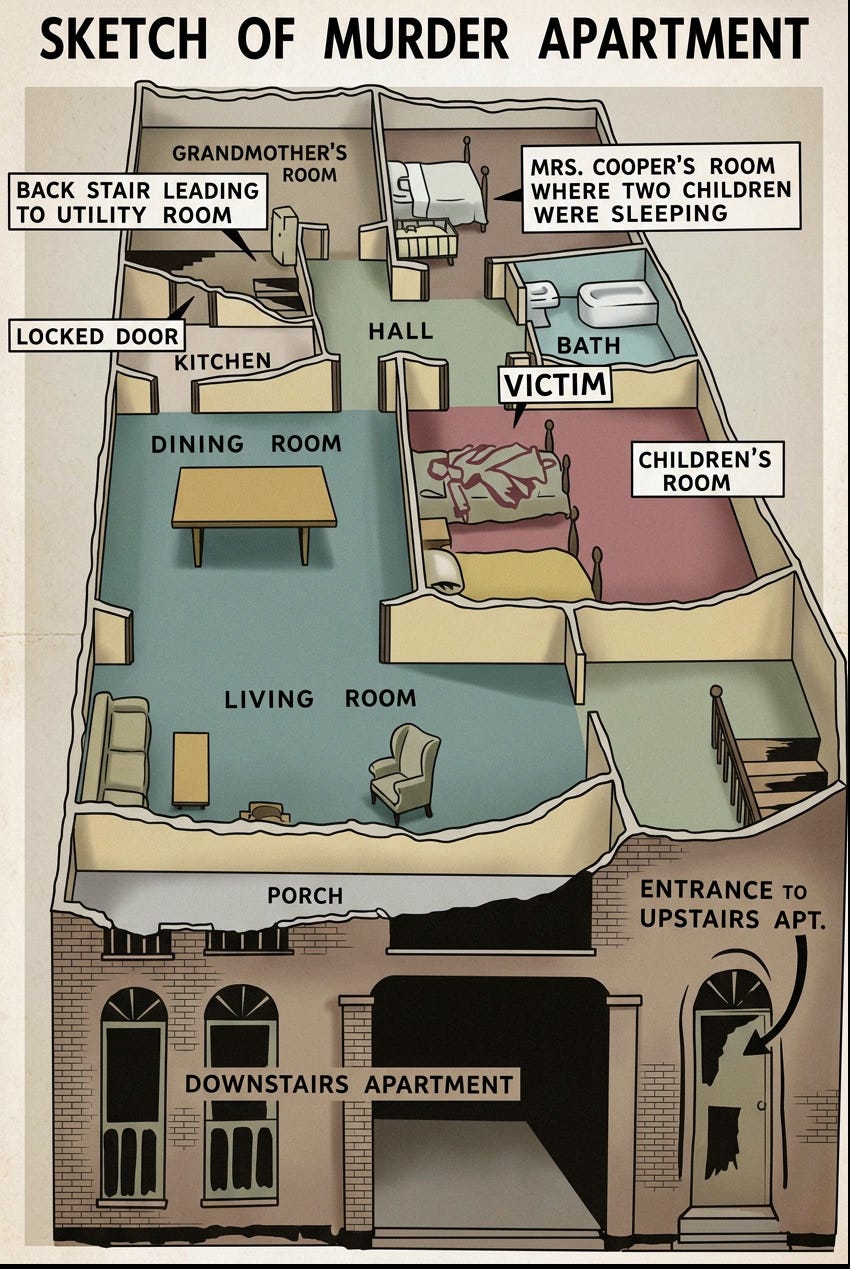
At 2:10 a.m., the babysitter, Cecile Plantagenet, locked the front door and caught a cab home.
At approximately 3:15 a.m. that Sunday morning, Grandma Coralee heard a scream.
