
Last Call at the Latin Quarter
On New Year's Day 1950, a visitor from Nashville named Robert Dunn Jr. died of knock-out drops in a Bourbon Street club, so the city formed a vice commission to investige
The bottle arrives before anyone names a price. A woman settles in beside the stranger, warm and curious about a man so far from home.
The waiter sets down champagne nobody ordered, at a figure nobody quotes. The stranger pays, because that is what a man does when the lights are low and a pretty woman is thirsty.
Keeping him buying is her whole line of work.
She is a “party girl” or bar girl, shortened to “b-girl”.
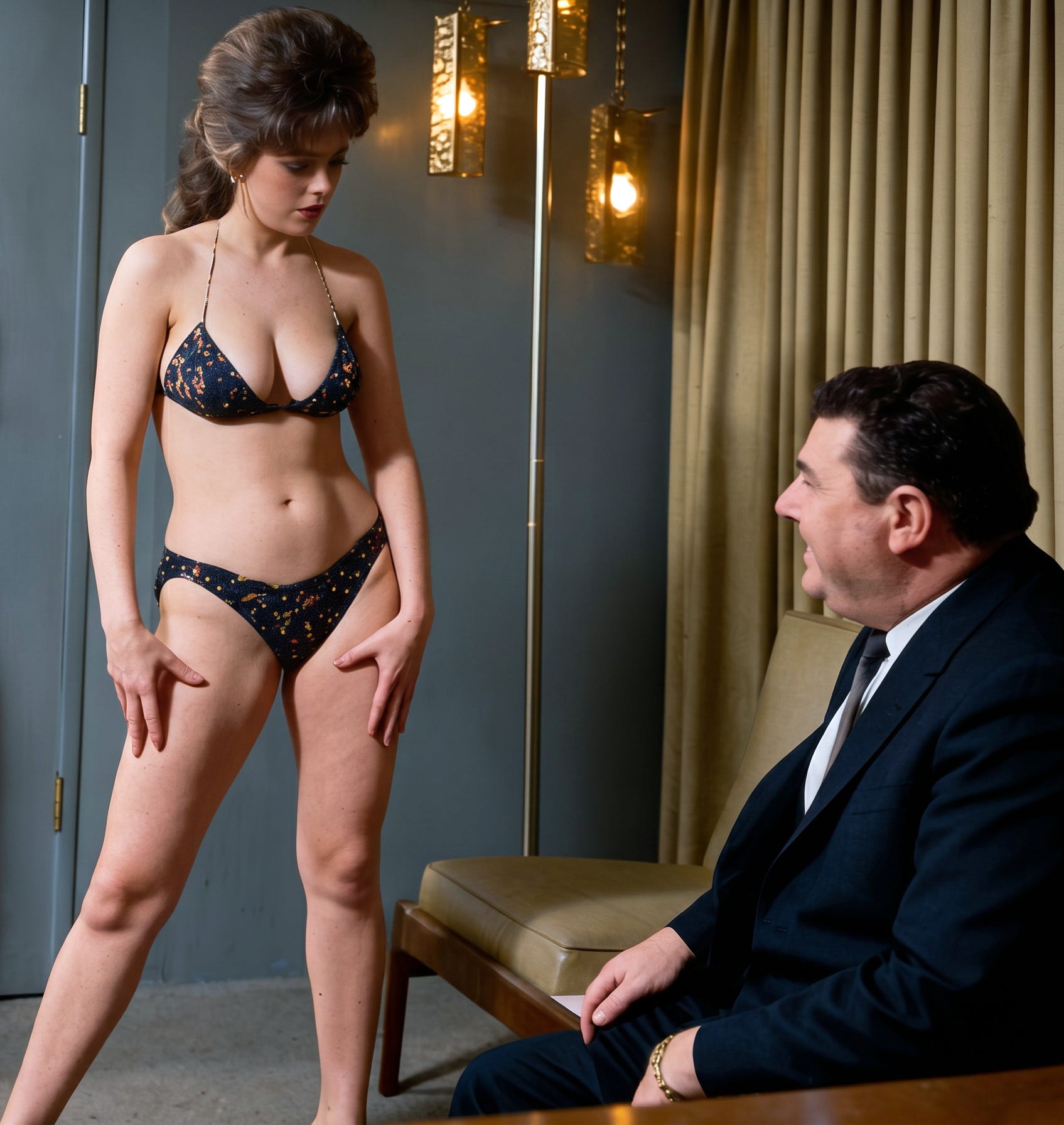
The waiters knew their part, too. They quit bringing change. They let a man drink past his money, and when the money was gone they walked him out to the banquette and left him there like a parcel set out for the morning.
Some nights, to hurry the math, a hand tipped a sedative into the man’s glass. On Bourbon Street they called it slipping a mickey.
Robert Dunn Jr. came down from Nashville and walked into the Latin Quarter Club, flashing new 50 dollar bills, making himself a mark. That New Year’s morning in 1950, the police said, one of the club’s b-girls slipped him Dunn a mickey, a dose large enough to kill.
He never woke up.
We do not know her name. The newspapers remember the club, the city Dunn came from, the day he died, and the drug that killed him, but they go quiet on the woman who poured the fatal dose.
Someone in that club knew her. No one said.
The papers did not spend their grief on the man. A wealthy out-of-town visitor dead on Bourbon Street was a nightmare of publicity, and the alarm that rose was an alarm about a lost customer.
None of it surprised the men who ran the street.
The b-girl racket was old news by 1950.
In 1945 the United States Brewers’ Foundation, anxious to keep beer respectable, cut off four Bourbon Street clubs for their part in it, the Moulin Rouge and the Puppy House among them. Within a month the clubs were back in good standing and the drinks kept coming.
The law tried too, after its fashion.
Before the 1949 Sugar Bowl, the police superintendent announced a cleanup, named the date the inspectors would come, and handed the street a week’s notice. The sweep charged exactly one club. At a press conference, when the superintendent assured reporters the nightclub owners agreed to cooperate, the audience laughed.
So when a tourist turned up dead, City Hall reached for the only instrument it trusted. It formed a committee.
Mayor deLesseps Morrison was a young veteran with a winning smile and a well-cut suit, elected in 1946 as the man who would scrub the old sins off New Orleans and make it presentable to industry.
Within months of his election, the mayor seated a seventeen-member citizens’ commission to study vice in the Quarter.
Two of its members owned Bourbon Street nightclubs. One was Owen Brennan. The other was Gaspar Gulotta.
They called Gulotta the Little Mayor of Bourbon Street, a small man who kept the peace on the street and, when peace required it, kept it with his fists.
When there were fresh complaints of b-drinking in Gulotta’s own club, Thomas Schniedau of the state alcohol board said plainly that such a man had no place on a commission against vice.
Morrison kept him on. “I have no apologies whatsoever for appointing him,” the mayor told the press.
The commission heard testimony and produced suggestions. The rackets it studied carried on in the same rooms, and within a year Morrison shelved the effort for the televised Kefauver hearings and never fully returned to it.
There was a plainer reason the cleanups never took. In 1953 the city’s own planners put the French Quarter’s tourist trade at thirty-six million dollars a year. A street earning that much money does not get closed.
It gets a committee.
Then an outsider read the Quarter the way Robert Dunn never lived to.
A separate body, the Metropolitan Crime Commission, hired Aaron Kohn, a former FBI agent fresh from dismantling the Chicago police on paper, to investigate the New Orleans department. His report came down in 1954. It recorded 166 bars in the Quarter and found that since Dunn’s death “the same conditions, in many of the same places, and usually under control of the same individuals” still existed.
Kohn’s investigators watched Frankie Ray, the master of ceremonies at the Casino Royale, hand cash to a patrolman. They heard a dancer billed as “the Georgia Bombshell” describe how her manager waved off the wages he owed her. The police, Ray reminded her, were on the side of the club.
That was the machine that killed Robert Dunn.
It did not break down. It was made to run exactly that way.
Read the report closely and its priorities surface. Kohn’s committee set the “use of knock-out drops” down in the same line as “lewd and sexually suggestive dancing,” as though a drug that stopped a man’s heart and a woman’s hips on a stage were equal offenses.
City politicians needed a distraction.
Across the decade that followed, its district attorneys arrested dancers by the dozen for the shimmy and the grind. They hauled the Cat Girl into court over a number called “Tom Cat Fever” and carried confiscated photographs in as evidence, proof of the Quarter’s ruin.
The b-girls who emptied a dead man’s glass kept their jobs.
Police arrested Caroline “Lucy” Cotta, 23, and Jacqueline Livermoore, 30, and charged them with leaving the state to avoid questioning in death of Robert Dunn Jr. Only Cotta eventually stood trial, along with bartender Carlo Quartararo.
The two admitted moving the body from a cot in the girl’s dressing room and back to a table in the club. No one could recall what happened to Dunn’s wallet, rings, and watch. They also could not name the person who gave Dunn the knockout drops.
Both defendants walked when the coroner, Dr. Grenes Cole, testified that Dunn died of “a heart stroke” unrelated to his chloral hydrate overdose as if there was a regular dose.
Now, seventy-six years later, the “party girl” who gave Dunn the drugs has never been identified.
Robert Dunn Jr. came to New Orleans with money in his pocket and went home in a box, and the club owners responsible sat, that spring, on the very commission assembled to study it.
Someone knew who drugged Dunn, but it was the one question nobody in the courtroom would answer.


