

Signal 30 - New Orleans
Kim Groves filed a brutality complaint against a New Orleans police officer, and he ordered her murdered on his cell phone while the FBI recorded him.

The van is parked in the New Orleans heat, and inside it two federal agents are listening to a police officer plan a murder.
His name is Len Davis. He is heavyset and round-faced, with a thin mustache, and on the day police arrest him he’s wearing an ear-ring and one of the loud vertical-striped shirts he favors, the wardrobe of a man who wants to be seen. On the street they call him Robocop to his face, a gangster with a badge, behind his back.
Davis lifts his cell phone. He wants a woman dealt with. He calls it a thirty.
The agents write the word down. In the New Orleans police code, a signal thirty means a homicide, but the agents don’t know that yet, and by the time somebody explains it to them, Kim Groves is already dead.
In the photograph of her most shown by the media, Kim Groves is smiling wide, her hair a dark natural halo around her face, the thin white strap of a summer top at her shoulder. She looks like a woman with nothing to fear.
She was thirty-two, a mother of three. She lived in the Ninth Ward.

In October 1994 she watched two officers beat a young man in her neighborhood, and she did the thing every citizen is told to do. She walked into a police building and filed a formal complaint against Officer Len Davis and his partner, Sammy Williams.
Davis knew about the complaint within a day. That was the trouble with gangsters with badges: he controlled the very system that was supposed to hold him to account.
The FBI got to Davis by way of a smaller crime, and a smaller man.
In 1993, cocaine ran through New Orleans like river water, and in some corners of the city the badge and the dope did business together. One of the men caught in the middle was Terry Adams, a lean young man with a taste for sharp suits and patterned ties, who sold a little dope and answered to Scaboo.
On Christmas Eve, Officer Sammy Williams demanded ten thousand dollars from him and promised him a beating and a life sentence if he came up short. Scaboo didn’t have the money and had thirty minutes to find it.
Desperate, he phoned the FBI.
Special Agent Stan Hatton couldn’t put ten thousand dollars together on a holiday evening, so he wired Scaboo and sent him back to Williams to beg for a payment plan. Williams took the deal. His handshake started Operation Shattered Shield.
To reel in more officers, the Bureau invented a customer. Special Agent Juan Jackson became JJ, a cocaine wholesaler from the East Coast with a warehouse needing protection, offering five thousand dollars a day for the men who could guard it. Jackson and Scaboo rehearsed a false history for hours, until their story sounded plausible.
Williams brought in his partner Davis. At the first meeting JJ made everyone strip to the skin to prove no one wore a wire. The officers searched the room and found nothing, because the room itself was the wire.
The agents needed the officers on tape saying exactly what they guarded. So a courier unloaded cocaine in the open, in front of them. The men were furious at the sloppiness, and the cameras recorded their fury, which was as good as a signed confession. They even coached JJ on how to make his drug trucks look like honest delivery vehicles.
When the patrol cars overheated in the Louisiana sun, the FBI thoughtfully provided a van rigged with microphones. Inside it the officers spoke without a filter. They bragged about the prostitutes they brought to the warehouse, and they weighed killing JJ and his couriers and keeping the cocaine for themselves.
Then came the complaint, and the signal thirty.
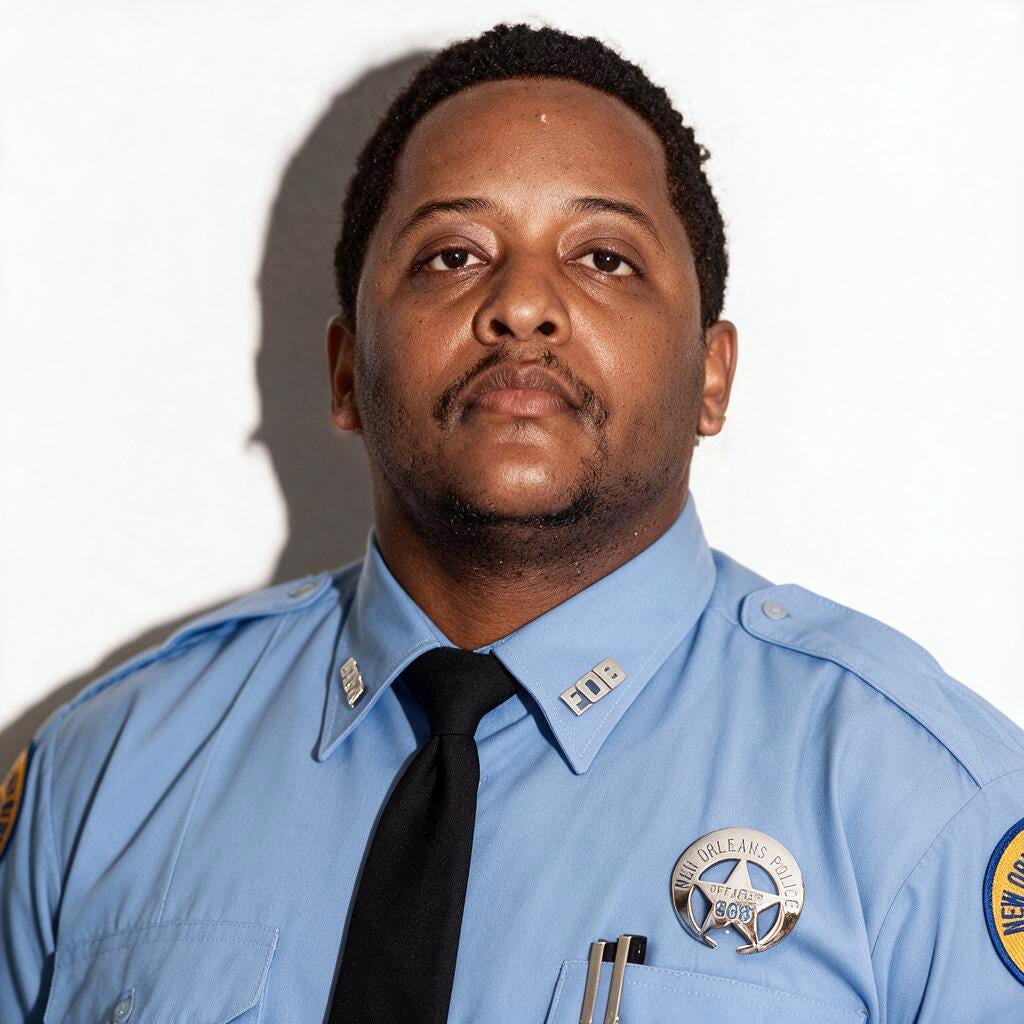
Davis contracted a man named Paul Hardy, and on the night of October 13, Hardy shot Kim Groves in the head a few steps from her own door. When word of the killing went out over the police radio, the wire caught Len Davis screaming with delight.
The agents recorded the order as it went out. But they hadn’t cracked the code in time to send anyone to her door.
JJ had to keep smiling at the murderer. The operation wasn’t finished, and the same tapes that tracked a murder also recorded plots to kill JJ himself.
The Bureau ended the sting on November 18, 1994, at a truck stop, with eighty-five agents in position, filming six additional corrupt officers guarding a shipment of cocaine setup just to catch them.
They arrested Davis at his house. Sammy Williams, confronted with JJ’s real name and a federal badge, decided he’d rather testify than hang. To arrest the rest without a gunfight, the FBI invited them downtown to give handwriting samples for a grand jury, then arrested them at the door.
At trial the courtroom heard the officers in their own voices, prompting dead silence in the room. The jury convicted Len Davis of murder and sent him to death row; a later court resentenced him to life.
Fifteen more NOPD officers went to prison.
New Orleans called it a wakeup call and handed a new chief, Richard Pennington, the job of scrubbing the department.
But ending the story there leaves something out.
Kim Groves did everything a citizen is supposed to do. She reported a dangerous man to the authorities, in writing and by name. The authorities listened to that man around the clock, and they had his kill order on tape.
She was murdered anyway.
That tape still exists. So does the photograph, the one where Kim is smiling in the sun, with no idea that the safest thing she ever did would be the thing that got her killed.