
Tarred and feathered
A dentist's story and the death of Ike Starns
PAW BILL TOLD THIS ONE every Sunday after church. My great-grandfather, W. O. “Paw Bill” Courtney, would settle into his chair and walk us through the night a Hammond dentist got stripped bare, painted with creosote, and covered in duck feathers on a public street.
My grandmother, “Maw Telliua,” would shake her head and say he was making half of it up. I didn’t care either way. It was the best story I’d ever heard.
Turns out Paw Bill was underselling it.
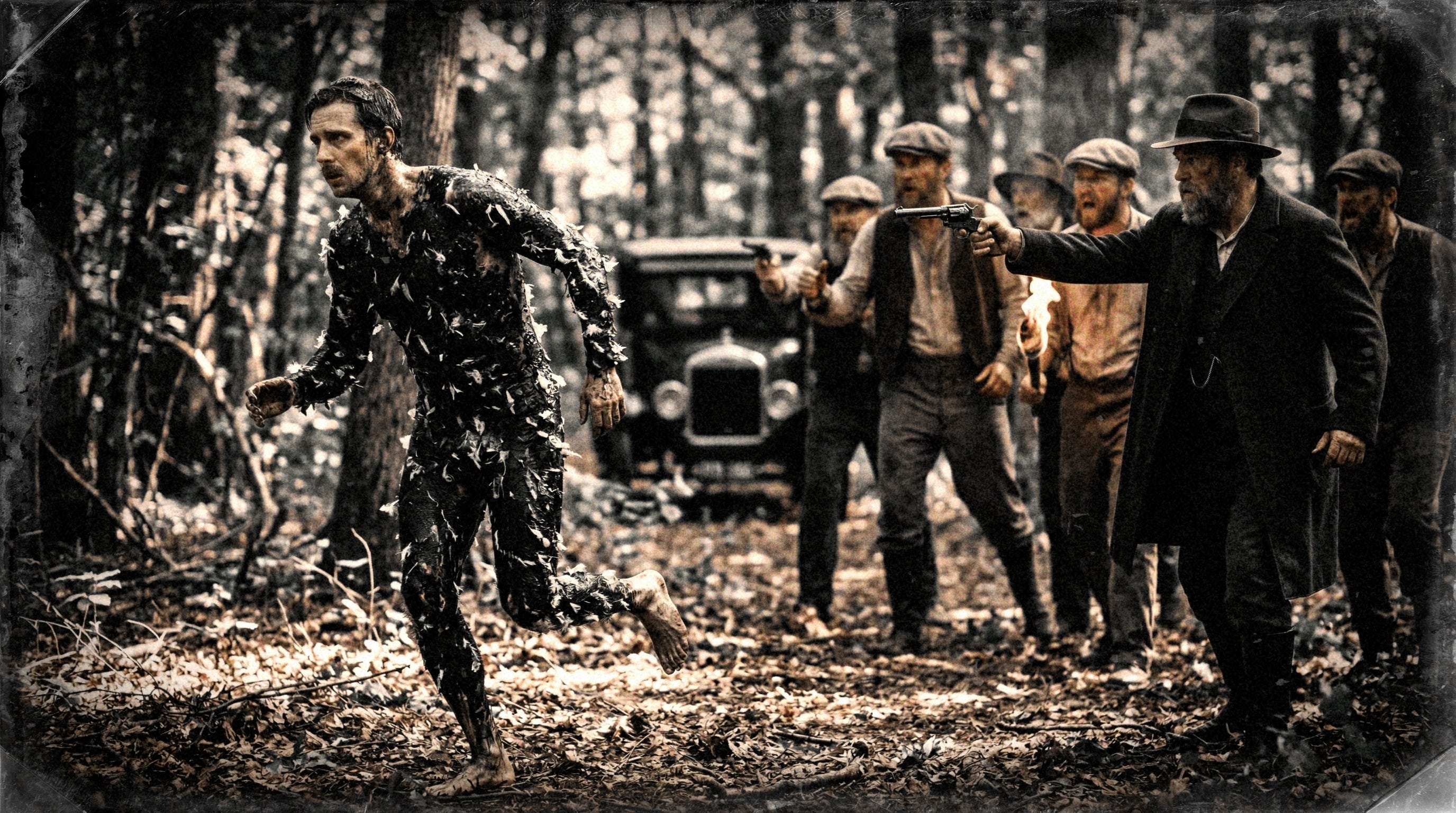
Years later, digging through newspaper archives from 1930, I pulled headline after headline off the front pages of papers in New Orleans and Baton Rouge.
One read “Hammond dentist tarred and feathered.” Another, “Starns admits tarring, labels dentist homewrecker.” There was “Crowds fill tar and feather courtroom” and even “U.S. court refuses to hear tar and feather appeal.”
The story had gone national. And everything Paw Bill had told me checked out — except the ending, which he’d left off entirely. He skipped the sad part. He skipped the gunfire.
It started on a Sunday in late May of 1930. Isaac G. “Ike” Starns, 42, a lumberyard owner out of Livingston, came back from a Shriner’s convention across the state line in Mississippi. Neighbors met him with whispers. While he’d been gone, his wife Gladys had been spending nights with Dr. Sedgie L. Newsom — the family dentist.
The following Monday evening, Newsom got called out on a house visit near the Tangipahoa-Livingston parish line. On the road, a canary-yellow Ford Chrysler with wire rims forced him to the shoulder.
Ike Starns stepped out holding a .38 revolver and put Newsom in the car.
He drove the dentist to a clearing in the woods outside Albany. A fire was already going. Four other men waited there. Ike carried a pillow under his arm.
In a courtroom weeks later, Starns would describe what happened next. He said the pillow came from his wife’s bed and that he made Newsom smell it before they pulled his clothes off.
“You want to be naked against my wife’s pillow,” Starns recalled telling him. “I’m going to grant your wish.” He brushed on the creosote himself, then tore the pillow open and pressed the feathers into the mixture. Duck feathers, he told the jury — and expensive ones at that.
Afterward, rather than leave Newsom in the woods, the brothers drove him back to Hammond. Ike dropped him at his own building, which sat directly across the street from the Tropic Cafe.
The restaurant was open all night. The dentist had no keys. No pockets to keep them in. He stood there, feathered, on a lit street, while late-night diners sat behind plate glass.
By May 27, Hammond Police Chief W. H. Rimmer confirmed an active investigation. Newsom had fled to relatives in Mississippi, where a physician helped scrub the creosote and feathers from his body. No lasting physical injuries, Rimmer said.
Tangipahoa Parish Sheriff Frank M. Edwards gave The States-Item a stronger statement — he vowed to arrest what the papers were already calling “the Tar and Feather Mob” inside of 24 hours.
Deputies in both parishes rounded up all five Starns brothers the next day. And these were not poor men operating in the shadows. Berlin Starns ran what newspapers called the biggest furniture operation in South Louisiana.
Newton, 39, had general stores in both Frost and Springville. Charles, 36, distributed flour out of Baton Rouge. Henry, 25, kept a store in Holden. The youngest, Gordon, just 22, worked for their father in Hammond.
Respected families, deep roots, real money.
The arrests set off a fight that had nothing to do with feathers. State Representative Marcus Rownd of Livingston Parish took the floor of the state house to dress down a New Orleans paper that had branded the brothers “outlaws from the free state of Livingston.” Rownd called it slander.
He said his parish had schools, churches, and lodges, and demanded the newspaper print an apology. “My people are not outlaws,” he told the chamber.
But the courtroom drama was the real show. The 21st Judicial Court split the trials between Springville for the Livingston residents and Amite for those in Tangipahoa. All five brothers shared the same attorney, Amos L. Ponder out of Amite, and Ponder built his entire defense on what he called Louisiana’s “unwritten law.”
His argument was plain. He told the court he could not advise his clients against doing what any man — judge, juror, or otherwise — would have done if someone came after his family. “When the day comes that morality and marriage do not come first,” Ponder said, “this country will go to hell flying.”
Ponder framed the tarring as poetic justice. He said Newsom’s affair had inflicted a psychological wound on Ike, and the brothers answered with a punishment designed to wound the dentist the same way — not in his body, but in his dignity. “My clients wanted the punishment to fit the crime, Your Honor.”
Ike himself took the stand and held nothing back. He confirmed every detail. Said he’d applied the tar and feathers with his own hands and that Newsom should count himself lucky to be alive.
Three criminal trials. Three acquittals. Newsom later sued in civil court and collected $6,000 from the state. And that, for most people, was where the story ended.
Not for Ike.
He’d been a decorated soldier with the 348th Infantry in France during the First World War. After he came home, he helped law enforcement hunt down two of the six bank robbers later hanged for the 1924 murder of Dallas Calmes over in Independence.
He was no stranger to violence, and he was no stranger to grudges. He and Gladys never patched things up. And whatever anger he carried toward Newsom never cooled.
Four years after the acquittal, in 1934, Starns pulled his yellow Chrysler up to the Central Drugstore in downtown Hammond.
He’d been drinking.
He drew a .38 — maybe the same one from that night on the parish line — and put two rounds through Newsom’s office window.
Inside, the dentist froze in the stairwell, a pistol in his hand that he never fired. Officers near the Columbia Theater heard the shots and crossed the street. Starns swung the revolver toward them, and they shot him dead on Thomas Street.
It happened in the same block of pavement where a naked, feathered dentist stood four years before, locked out of his own building in the middle of the night.
We’d have a clinical name for what Ike did now. In 1934, people around Hammond just said the man died of a broken heart.
If you have information about any unsolved crime in southeast Louisiana, contact HL at Bayou Justice or call Crime Stoppers.
There is no case too old and no tip too small. Somebody out there knows something.


