

That Stormy Weather Girl
She told reporters her name was Stacey Lawrence, of Philadelphia; it was actually Helen Spellman, a child bride from Alabama hiding from the mob.

The DeSoto’s engine finally quit at the corner of Philip and Decatur, in a rain that had followed it out of Alabama.
Three women ran from the steaming coupe to the shelter of the Morning Call coffee stand: Josephine Spellman, her daughter Mildred, and Helen, not yet twenty and already using her married name less than she used her mother’s advice.
Joe Gleason followed them in. He was heavy-set, his hairline already retreating, and he owned a bar down the street that needed women who could bring customers through the door.
They listened. After a time, Josephine said they could help, but only on one condition of her own: Gleason had to forget he had ever seen a 1942 baby-blue DeSoto President.
He agreed. Nobody mentioned the DeSoto again.
By February 1945, Helen was dancing and hosting at the Old Opera House. When the club ran short on chorus girls, the other women dared her to strip if she thought she could do it better.
“I said I thought I could,” she told a reporter two years later. “And that was my nemesis.”
In a dim French Quarter nightclub, smoke-filled and clinking with glasses, a raven-haired woman mounts a ladder and poses atop the bar itself, fully clothed. The orchestra swings into “Stormy Weather.” With each piece of clothing she drops, the room temperature rises to match it. In a whirlwind finish, she leaves the ladder wearing the legal minimum.
Gerald Taitt of the New Orleans Item is watching from below, notebook out. It is January 1947, and he has come to see what the fuss is about.
The fuss had a name by then, and the name had an origin story. A drunk had grabbed her mid-routine some months earlier; she kicked his shins until he let go. The next night a customer asked for “that Stormy gal,” and it stuck.
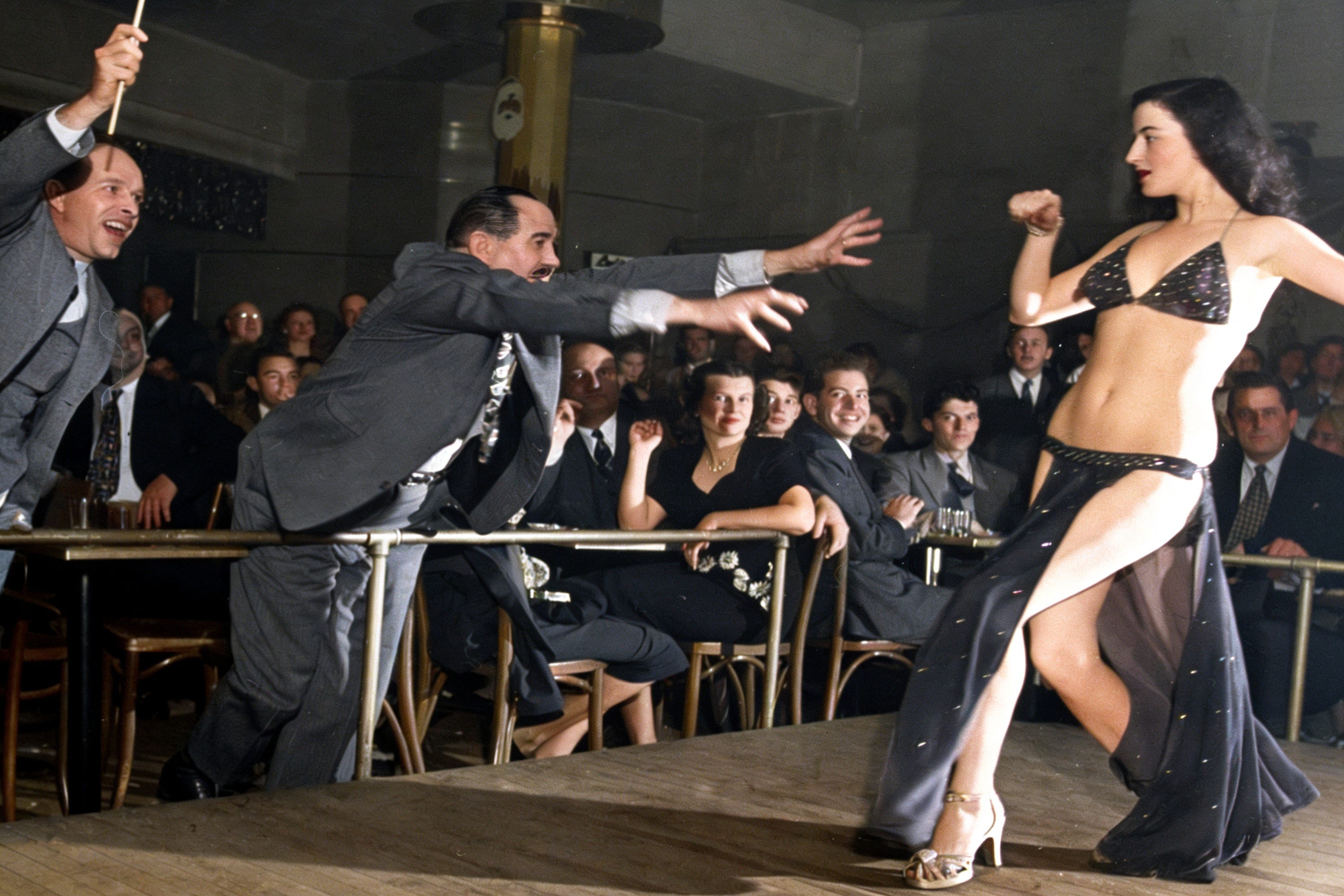
Jim Sharp got there first, in the New Orleans States on December 11, 1946: a striking brunette, he wrote, whose act was “artistic, rather than vulgar,” hoping for a career on Broadway. She gave her name as Stacey Lawrence, of Philadelphia.
Taitt asked about her wedding ring. She said it warded off wolves.
She did not mention Jesse Wyndon Floyd, the husband in Alabama she had not seen since 1944. She did not mention that she herself had invented the name Stacey Lawrence, or that the dancer’s real name was Helen Spellman, born in Metairie, raised on the gambling side of Phenix City. New Orleans applauded a woman who did not exist.
One month later, Stanley Lyle, tall and dark-skinned, owner of the Casino Royale, lured her away from the Old Opera House with better billing and a taste for publicity the Old Opera House’s silent partners had never allowed.
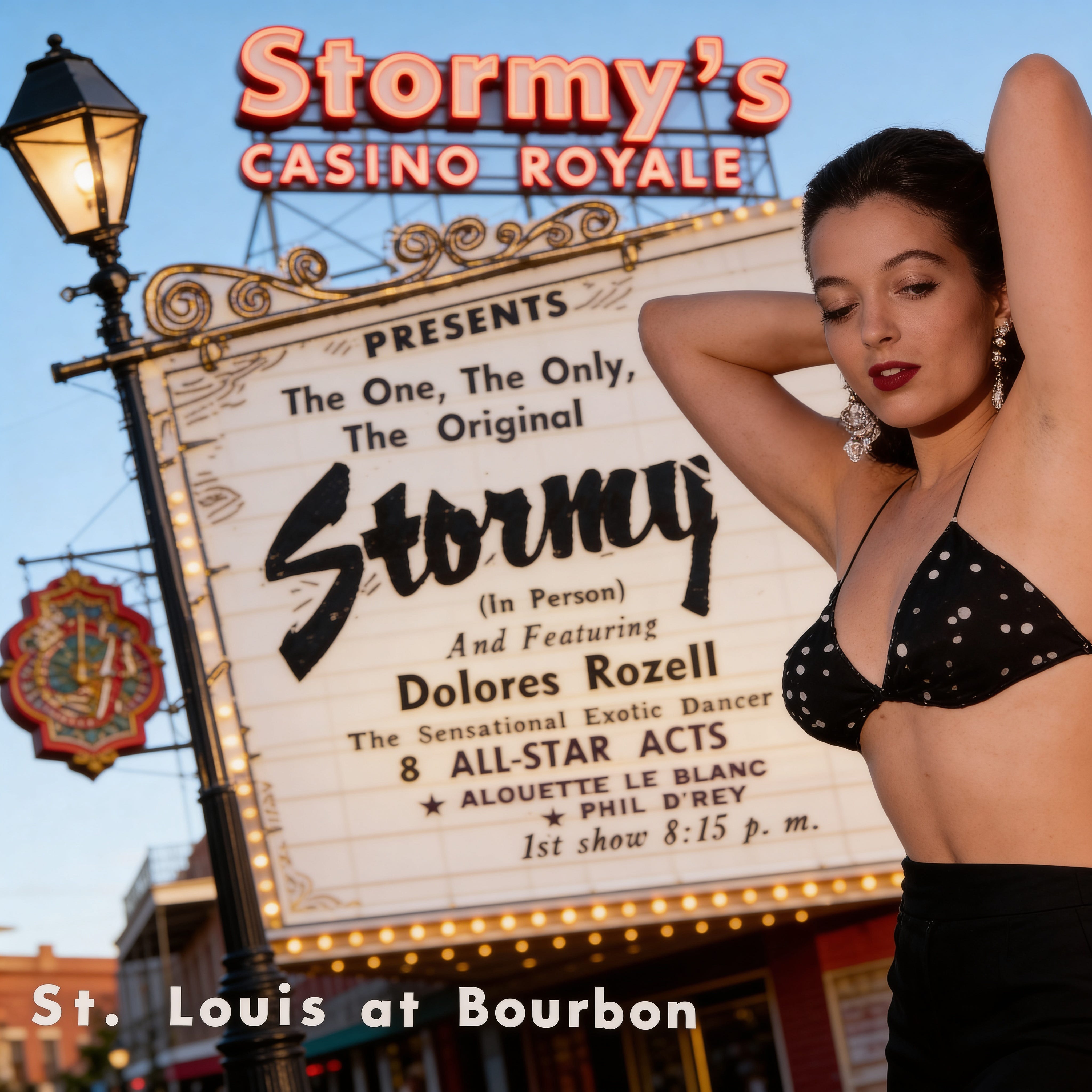
Charles Nethaway profiled her that same year: a hundred fifty dollars a week, with three national magazines competing for her photograph. The police chief showed up for her first show instead of closing the club, the way the ministers expected him to. “I figured to hear from the ministers right away,” he said.
The publicity found other places to go. In February 1947, a Louisiana State University magazine called Pell Mell put Stormy on its cover and sold out in an afternoon. Perry Cole, the dean of student affairs, banned the issue and rebuked the staff.
LSU did not expel Pat McIntyre, the student editor responsible. Students nominated him for president instead, and Stacey volunteered to campaign for him on campus, over his own objections.
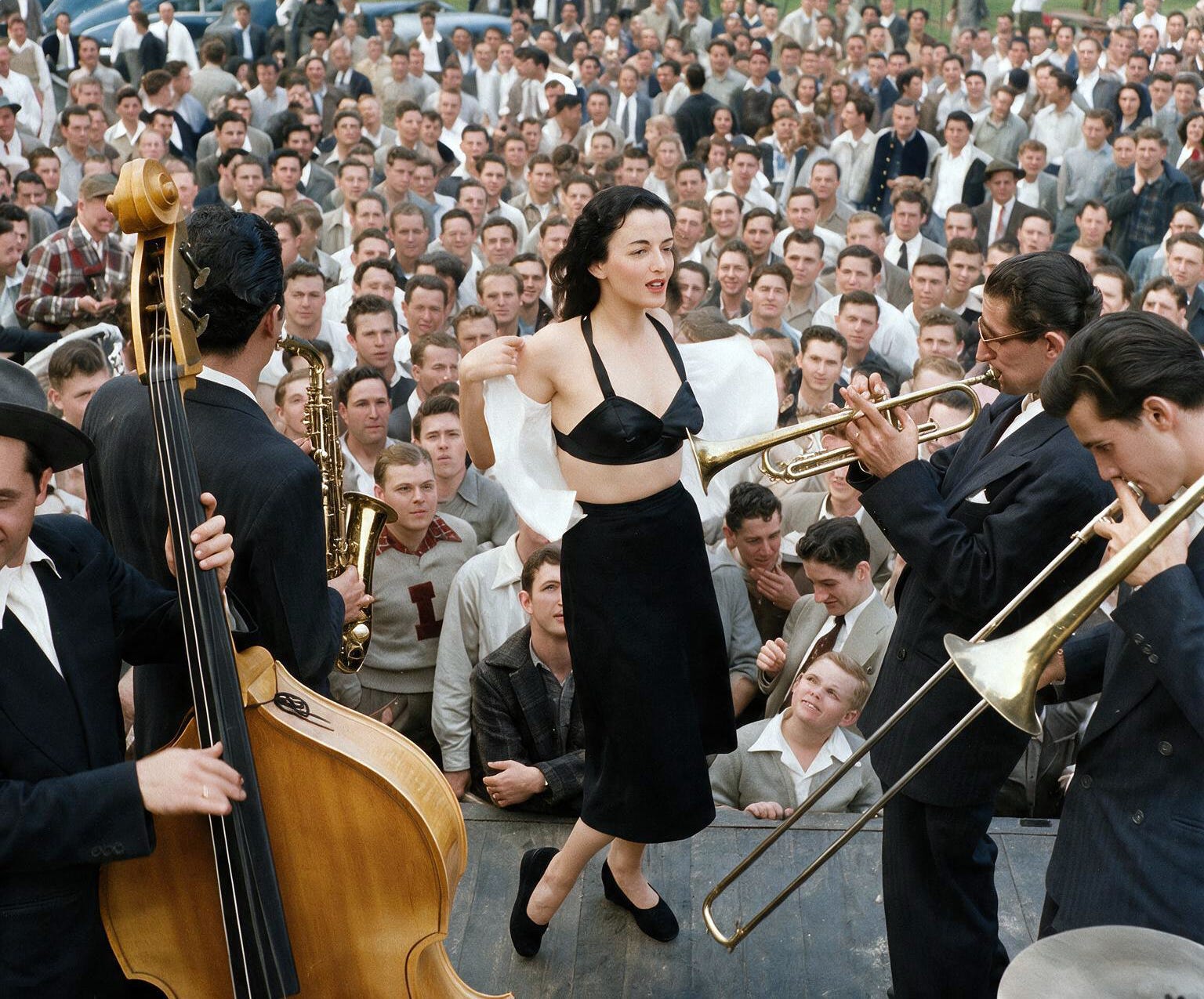
On March 4, 1948, she came anyway, in sunglasses, a white blouse, and a long black skirt, and stripped down to a two-piece bathing suit on the back of a flatbed truck. Students pulled Stacey off a truck where signs mocked Perry and carried her to the campus lake. They threw her in.
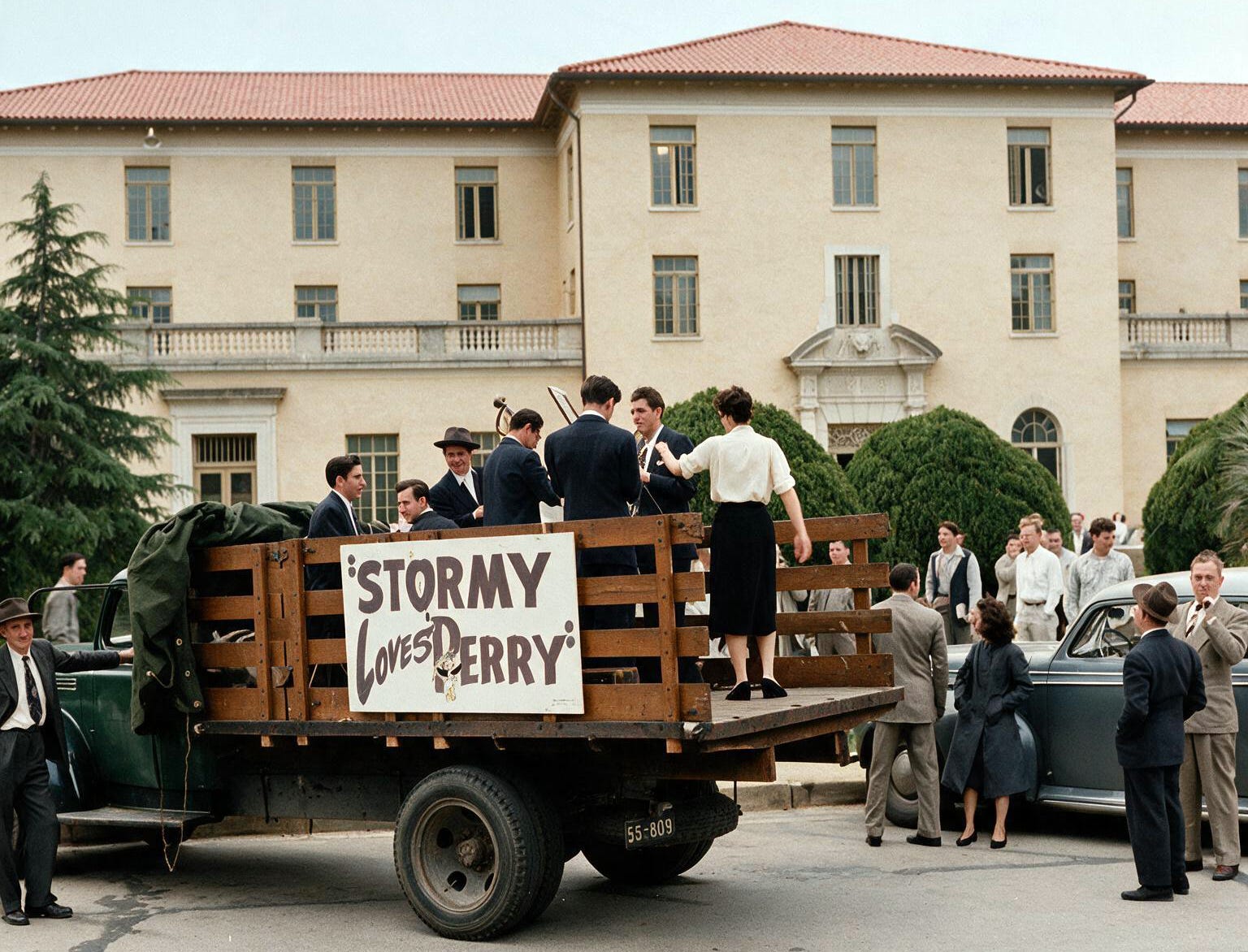
A riot followed. Rioters tore the windows out of the rented truck, and a co-ed smashed the Life Magazine photographer’s camera. Stormy left the field with a scraped foot, four loose teeth, a swollen lip, and a black eye.
“One co-ed really whacked me,” she told an Associated Press reporter that day. “But that’s what bothers me. Male students did this damage. That doesn’t add up.”
It did not add up, and nobody at LSU or in Baton Rouge seemed interested in why grown men had put a woman in a lake over a magazine cover.
Her own father settled the question of who she really was. Proud of a Life Magazine spread, Henry Spellman posted her photograph behind the bar at Buddy’s Place, across the bridge from Phenix City. A reporter from South Magazine asked about it, and Henry, seeing no harm in it, told him: Stormy, Queen of the Vieux Carré, was his daughter Helen.
South Magazine ran the story. The Roanoke, Alabama Leader reprinted it soon after, photograph and all.
The article said nothing about a murdered woman named Lonnie Foster, or a chifforobe, or a DeSoto that had never turned up. It said only that Helen Spellman, twenty years old, was not married.
A telephone call reached the club not long after. James “Big Jim” Folsom stood six feet eight inches in person; on the phone, all Helen had was a voice, warm and already familiar with the article her father had caused. He asked Helen Spellman to campaign for him if he ran for president, and told her he’d be proud to have her.
Knowing whose money had always stood behind Folsom’s, she told him she would be delighted to support so honest a candidate. Then she hung up and panicked.
Within weeks she persuaded John Lester, the Item columnist she had secretly married six months earlier, to take a job at the Newark Star-Ledger. Within days they were in New York. Helen was expecting a son and auditioning for Broadway under yet another name.
She would rather lose New Orleans than be Helen Spellman again.
Behind her, the club still had her name on the marquee. It did not yet have anyone to fill it.
TOMORROW—THE CONCLUSION.