

The Court Told Them Where to Find Him
A federal judge ordered Barry Seal to spend every night unarmed at a Baton Rouge halfway house, where three Colombian gunmen waited.

A little before six on the evening of February 19, 1986, a white Cadillac turns off Airline Highway and into the lot of the Salvation Army halfway house in Baton Rouge.
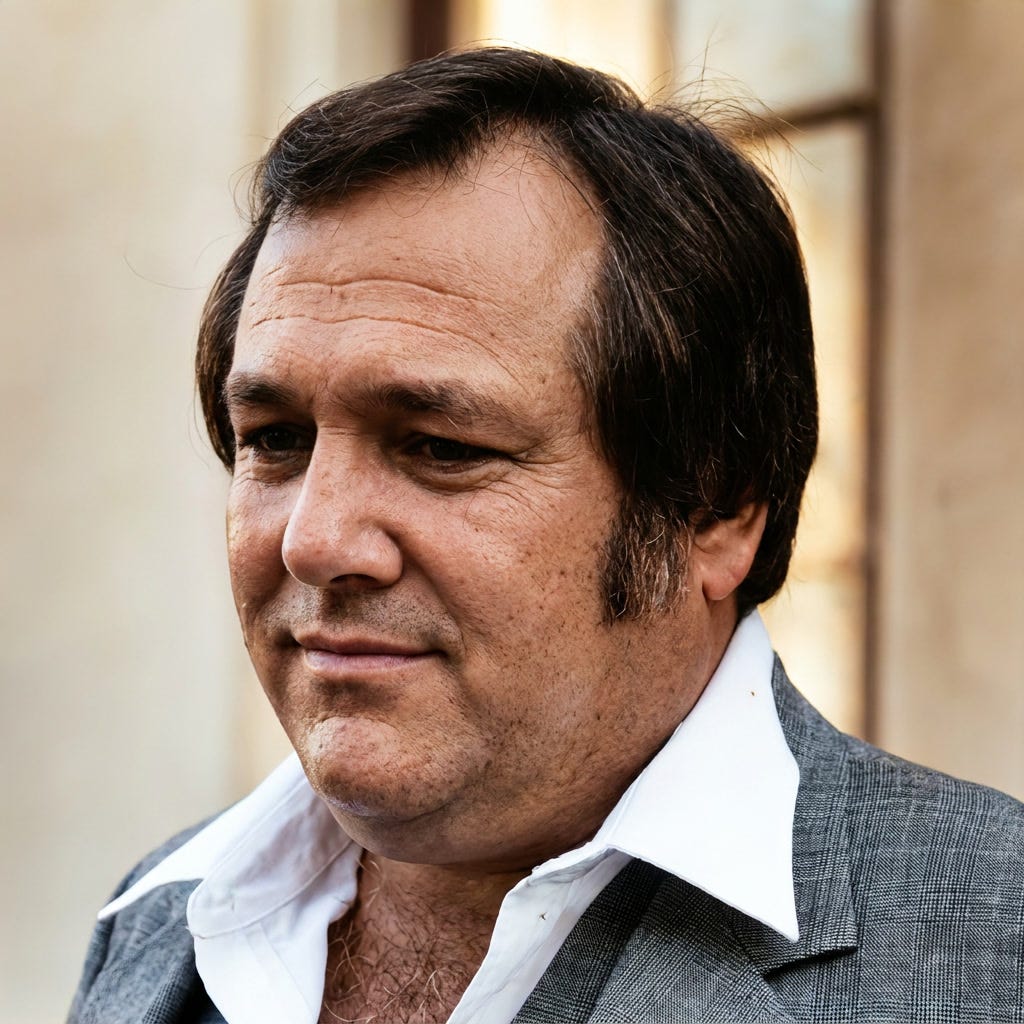
The driver weighs close to 280 pounds. The Medellin men who hired him called him El Gordo, the Fat Man. He’s forty-six. There’s no pistol in the car, because a federal judge has forbidden him to carry one.
A man crouched behind the donation bin stands up with a MAC-10, a suppressor screwed to the barrel.
He fires a dozen rounds. Six hit Adler Berriman Seal, whom everyone called Barry, in the head and chest, and he dies in the driver’s seat.
He was staying there because a court ordered him to.
Seal had already made his deal. The Justice Department, working from a Florida case, agreed to probation for what he could give the government, and U.S. District Judge Frank Polozola was bound by it.
He said what he thought of that from the bench. “Drug dealers like Mr. Seal are the lowest, most despicable people I can think of,” Polozola said. “In my opinion, people like you ought to be in prison.”
He couldn’t send him there. So on December 20, 1985, he attached a condition to the probation: six months of nights, six in the evening until six in the morning, at the Salvation Army halfway house on Airline Highway. No armed bodyguards, and no gun of his own.
Lewis Unglesby, Seal’s attorney, told Polozola in open court that the order amounted to a capital sentence.
Seal put it plainer. The judge, he said, “made me a clay pigeon.”
He started reporting to the Salvation Army on January 24, 1986. United Press International reported on February 20, 1986, that the week he died marked the first time he’d driven himself in and out alone.
Twenty-six days.
Seal was born in Baton Rouge in July 1939, the son of a candy wholesaler, and he held a student pilot’s certificate at sixteen. TWA hired him in 1964, and within a few years he was flying 707s to Western Europe as one of the youngest command pilots in the fleet. Federal agents arrested him in July 1972 for a scheme to fly plastic explosives to Mexico. The case collapsed in 1974, and TWA fired him anyway for taking medical leave to do it.
Unemployed, he went back to flying, the only job he knew. But this time, his cargo changed.
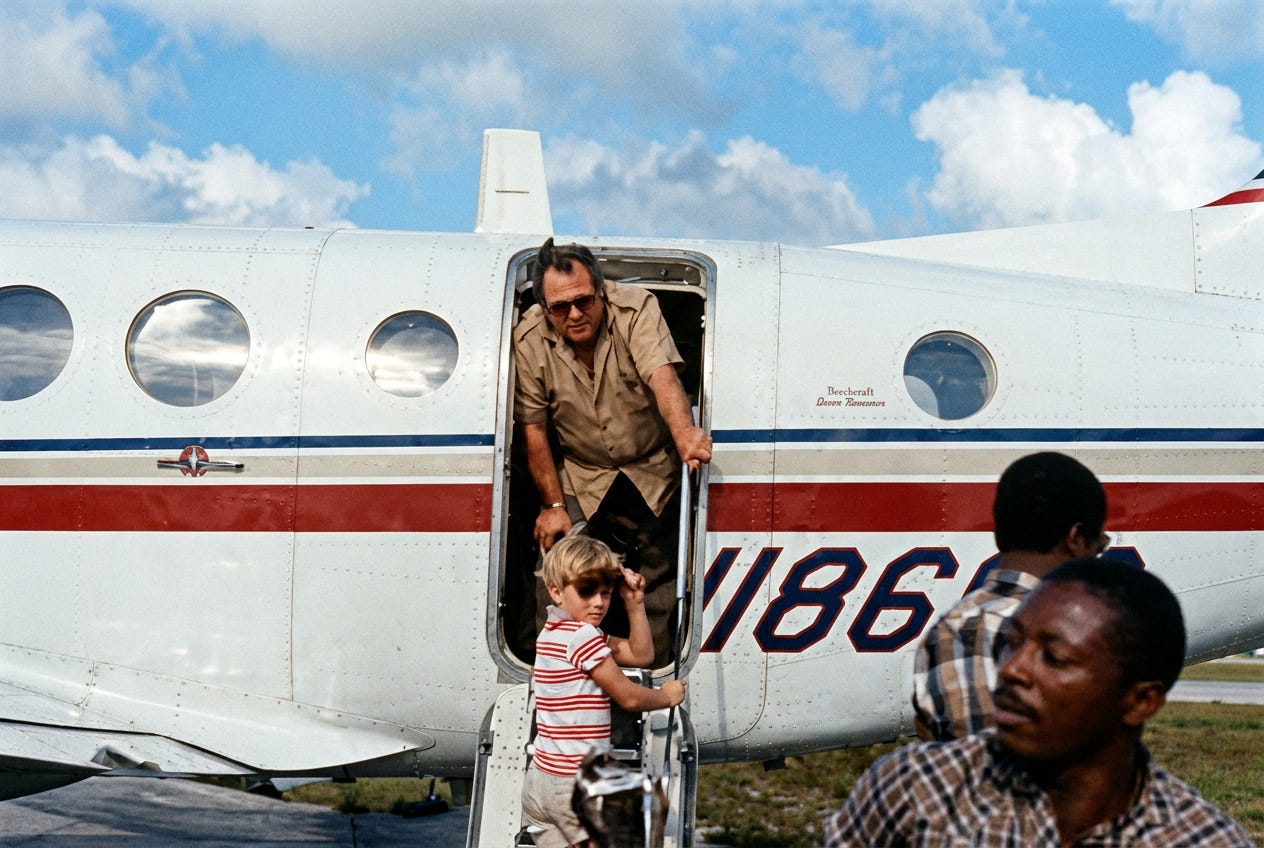
Through the early 1980s he ran marijuana and cocaine out of South America for the Medellin cartel, first from an airstrip at Port Vincent, Louisiana, later from Mena, Arkansas.
March 1984 is when it stopped. Facing federal charges he could not fly out from under, Seal went to work for the Drug Enforcement Administration.
On June 25, 1984, CIA technicians fitted hidden cameras into the C-123K cargo plane Seal flew, and took photographs showing cocaine being loaded in Nicaragua with Pablo Escobar standing a few feet away. The Reagan administration used those pictures to tie the Sandinista government to the cocaine trade.
That’s the operation that got Barry Seal killed. Who arranged his hit is still up for debate decades later.
The FBI took everything from the trunk of Seal’s Cadillac that night.
What was in there depends on who tells it. Seal’s wife said afterward that she found George Bush’s private telephone number among her husband’s things. Daniel Hopsicker, who covered the case in his book “Barry and ‘the Boys,’” put the number in the trunk among the items confiscated by the Bureau.
Dandra Seale, no relation, was Seal’s secretary, and she never bought the official account. She told author Roger Stone the CIA allowed it to happen. “He had a chart, dirt on anybody and everybody,” she said. “They were afraid of him.”
Richard Sharpstein, who defended one of the gunmen, said all three Colombians told the same story. An “anonymous gringo,” a U.S. military officer, had directed them where to go and what to do once they were in the country. The gringo matched the fest of Colonel Oliver North.
However, no document has ever put North in Baton Rouge, and no prosecutor has charged him.
Unglesby’s own explanation had nothing to do with Washington. The cartel killed Seal, he said, to stop the extradition of Jorge Ochoa from Spain. “It worked,” Unglesby said. “Ochoa wasn’t extradited.”
Publicity forced the court to move the trial to Lake Charles, where it opened in April 1987.
Luis Carlos Uribe-Munera testified that Ochoa ordered him to kill Seal in January 1986, and that he took the job but backed out when he learned he’d be killed himself.
Cartel gunmen still shot him five times.
But he lived.
The case against the three who did hit Seal was solid. A witness identified Miguel Velez as the driver, and a second saw Luis Carlos Quintero-Cruz outside the car handing off the MAC-10. Investigators lifted all three men’s fingerprints from the interior, and the salesman who sold the car identified Bernardo Antonio Vasquez as the buyer.
The jury convicted all three. Life without parole.
Velez died in Angola on August 25, 2015, after some time in hospice.
The Louisiana Board of Pardons and Parole voted unanimously to recommend cutting Vasquez’s sentence and setting him free.
Governor John Bel Edwards refused on January 27, 2023. His office said Vasquez had come to Baton Rouge for the single purpose of a murder for hire against a federal witness.
Quintero-Cruz went before the board on September 18, 2023. “I take full responsibility, and I honestly regret that I took Mr. Barry Seal’s life,” he said. The board split two to two, which in Louisiana is a denial.
His parole was also denied.
I’ve covered Louisiana crime for forty years, and I’ve never felt right about what happened in that parking lot.
JThree men flew up from Colombia to kill a federal witness, and they never had to follow him or wait for a mistake.
They only had to be there at six because a judge insisted their target must be there.
The order that put Barry Seal in that lot, unarmed, twelve hours a night for six months, is no conspiracy theory. It is a legit federal record in Baton Rouge, signed and dated December 20, 1985, and read aloud in open court.
Somebody was listening.