
The Tomato Salesman (Part 2)
The Kidnapping of Carlos Marcello
For nearly a decade Carlos Marcello had walked into the immigration office inside the New Orleans Masonic Temple building, signed the logbook, traded a pleasantry, and walked back out.
He knew the routine the way he knew Jefferson Parish.
But on this day, his case officer told him to sit.
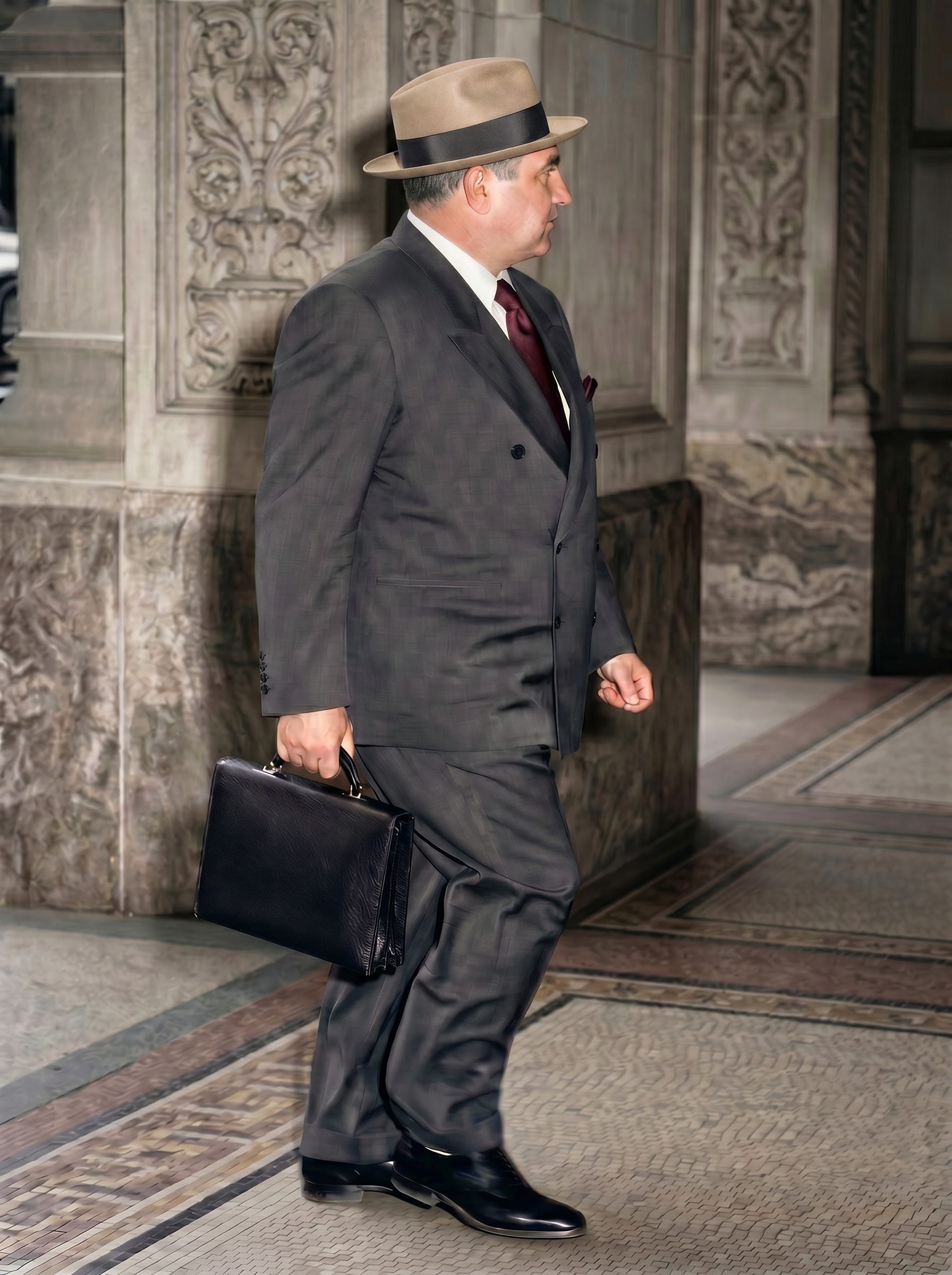
Carlos does not sit. He stands in the doorway. Something is off. The case officer, cordial most days, now won’t look him in the eye.
Two uniformed men step in from the hallway. One of them takes Marcello’s wrist, the handcuffs click, and the officer reads a deportation order.
Carlos asks to consult with Philip Smith, the New Orleans attorney who accompanied him to the meeting.
The answer is no.
Carlos asks to stop at home for a suitcase and clothes.
Another no.
He asks to call his wife.
The answer is still no.
Philip Smith is also prevented from using a telephone.
Carlos, short, thick through the chest, a barrel of a man in an expensive suit, seldom felt surprised.
That changed Tuesday, April 4, 1961.
Born Calogero Minacore, in Tunisia, to Sicilian parents, Carlos came up through Depression-era fruit stands and slot machines until he directed every illegal dollar moving through the Gulf South.
The Associated Press began calling him the “crime czar of New Orleans” in 1959. Federal prosecutors had failed to deport him repeatedly since 1953.
In 1959, Bobby Kennedy, boyish and sharp-jawed at thirty-four, served as Chief Counsel for the McClellan Committee investigating organized crime’s impact on labor unions.
On national television, Kennedy demanded to know why Carlos Marcello had not been deported.
In 1960, as attorney general of the United States, Kennedy gained the power to make it happen.
But Carlos felt ready.
Knowing Kennedy wanted him gone, he planned his own exile. With Sicily too far away to run his businesses, Carlos had attorneys manufacture him a Guatemalan birthright.
For a hundred thousand dollars, a con man named Carl Noll set it up.
A government minister’s law partner drove the countryside in a state car until he found a village ledger with a blank line for the day Marcello was born.
They matched the ink and faked a birth certificate with the name Calogero Minacore. Next, they stamped a forged passport and citizenship papers with a genuine Guatemalan seal.
Guatemala was in South America. A nearby country, a short flight from home.
Carlos had a perfect plan.
Perfect until Bobby Kennedy used the plan against him.
When the Justice Department learned the Guatemala papers were forged, instead of exposing the fraud, Kennedy’s men told the Guatemalan government the documents were authentic and requested Carlos be granted a permit of re-entry.
The moment that permit cleared, the deportation order went out.
Now, Carlos sat handcuffed in the New Orleans Masonic Temple.
With no lawyer, no phone call, no change of clothes, and very little cash in his wallet, government thugs marched him to a car.

Next, a small convoy with sirens running, raced Carlos and Philip Smith to Moisant Field, where a seventy-eight-passenger airliner sat idling, empty, with only the pilots aboard, and no one would give Carlos his destination.
INS Agent Arthur T. Bero pushed Carlos up the ramp, leaving Philip Smith standing on the tarmac with two uniformed INS officers.
“Can I use the phone now?” Smith asked.
The tallest officer said he could after they got coffee.
Cup in hand, Smith called Carlos’ son, Joe, and Washington Immigration Attorney Jack Wasserman.
Carlos, who knew violence from both ends, expected to be thrown out of the plane over a swamp or the ocean. But the armed men abducting him laughed when he suggested it, swearing their actions were within the law and approved by the attorney general of the United States.
The aircraft flew twelve hundred miles without another word being spoken. No food was served on the flight, not even water, until the plane set down at a military airbase outside Guatemala City.
The colonel in charge of the base, Antonio Batres, reviewed the order and the birth certificate and shrugged. He had no idea what to do with Carlos until his secretary volunteered to take him home with her.
That night, the secretary offered the mob boss the far side of her only bed, but Carlos declined.
“I didn’t have no pajamas,” he said later. “I was ashamed.”
The next morning, the secretary drove Carlos to the Biltmore Hotel in Guatemala City. After checking in, he wired home, telling the family to bring him some cash.

Within days, Mrs. Marcello, Jacqueline, arrived with her mother; their 17-year-old daughter, Florence; their son, “Lil’ Joe;” and Carlos’ brother, Sammy; with his uncle, Felice Galino of Patterson, Louisiana; and Attorney Michael A. Maroun.
Everyone joined Carlos Marcello at the Biltmore Hotel.
Over the next month, Carlos and crew attended local horse races and held court with Guatemalan businessmen. They talked shrimp boats and casinos as the country’s aristocracy flew them around in the president’s plane.
Thirty days later, Wednesday, May 3, 1961.
Ranulfo Gonzales Ovalle, Guatemala’s chief of secret police, told President Miguel Ydigoras Fuentes that Carlos Marcello’s birth certificate was a forgery.
Furious the mob and the United States government had duped him, Fuentes put the Marcello family on a plane, including another brother, Vincent Marcello, who arrived that morning with his wife.
When Attorney Mike Maroun refused to board the plane, President Fuentes threatened to put him and his boss in jail.
Carlos suggested he and Maroun remain in the hotel as paying customers until another country agreed to allow them to immigrate there.
Fuentes agreed, but at 11 that evening, Chief Gonzales and Detective Rafael Corado pulled both men from their beds and drove them over the border of El Salvador, kicking them out of their country.
Just inside the border, El Salvadoran soldiers arrested and jailed both men overnight for illegal entry into El Salvador.
Friday, May 5, 1961.
The next morning, Carlos and his lawyer stepped off a prison bus facing a forested hilltop in Honduras. The bus rolled away, leaving them stranded and lost, miles from the nearest town.
Under a hundred-degree sun with no water, two middle-aged men in silk suits and alligator shoes began climbing jungle trails, stumbling, and falling, again and again.
Mike Maroun said before his death in 2005 that Carlos eventually collapsed onto the dirt, dehydrated, cursing Bobby Kennedy.
He told Maroun the attorney general was in an air-conditioned Washington office with his feet propped up, laughing at them.
The angry pitch in his voice heightened until he gasped in a way Maroun thought sounded like the start of a heart attack.
“If I don’t make it, Mike,” he said, “tell my brothers when you get back, what dat kid Bobby done to us. And tell ‘em to do what dey have to do.”


Wonderful details finally bring this often sparse story to life. Good work.